
Identification & care guide
How to Tell If Turquoise Is Real: Safe Checks & Common Mistakes
To check whether turquoise is real, start with its written description, examine the surface without damaging it, and ask about treatments. Appearance alone cannot confirm that a stone is turquoise—or that it is untreated. The most useful distinction is between turquoise, treated turquoise, and another material made to resemble turquoise.
If you have a bracelet, necklace, or loose stone in front of you, you can gather useful information without scratching it or applying chemicals. Here is a practical way to decide what to ask next.
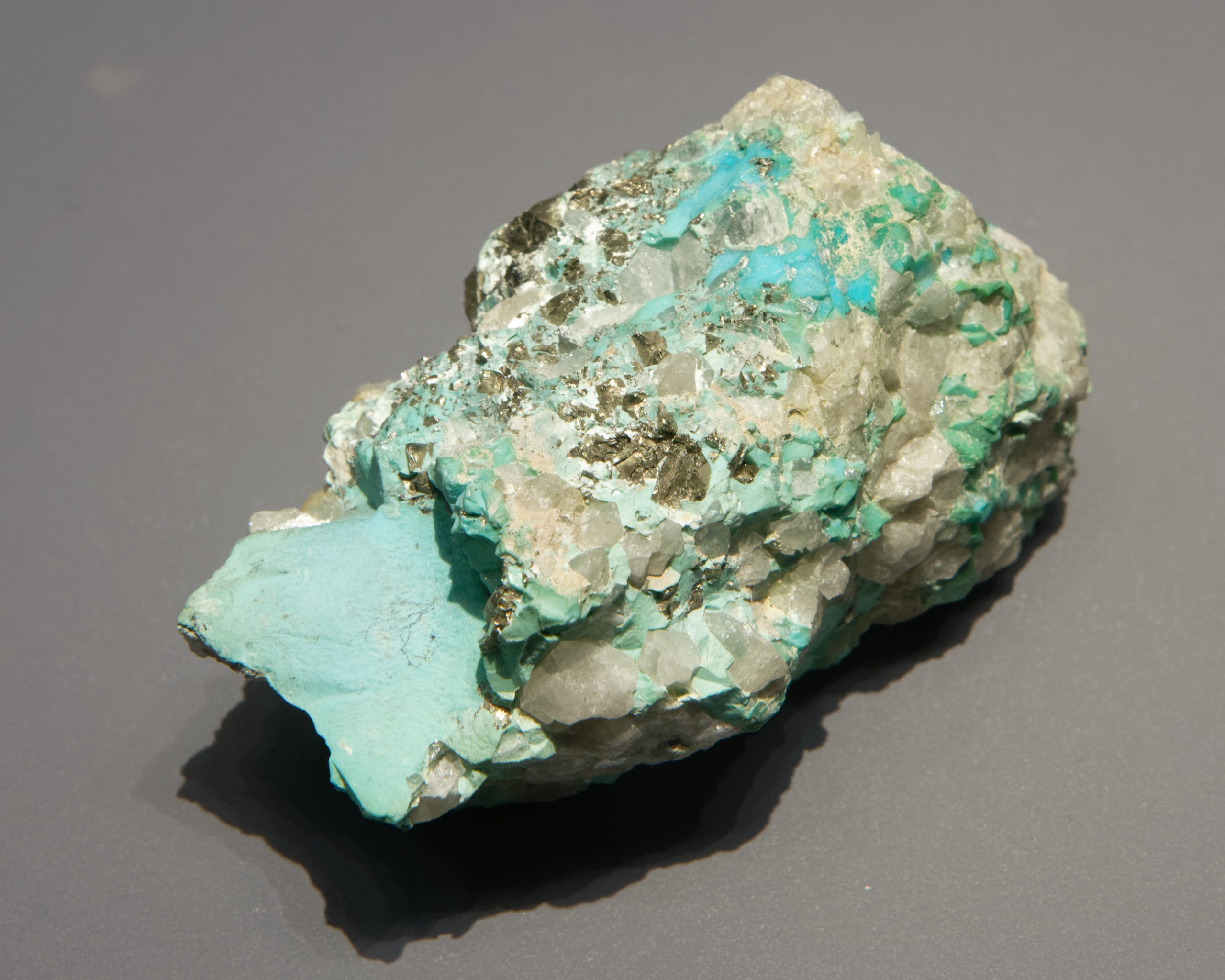
First, separate “real” from “untreated”
“Is it real?” leaves two different questions unanswered: what is the material, and what has been done to it?
| Description | What it means | What to ask |
|---|---|---|
| Untreated turquoise | Turquoise without enhancement treatments; cutting and polishing are separate from treatment | What supports the untreated claim? |
| Stabilized or otherwise treated turquoise | Turquoise that has undergone treatment, such as resin impregnation or dyeing | Which treatments are present? |
| Imitation turquoise | Another material that resembles turquoise | What is the actual material? |
| Reconstituted, composite, or “block” material | A label that needs a specific explanation of composition and manufacture | Does it contain turquoise, and what else is in it? |
Stabilization and dyeing are not interchangeable descriptions. GIA published a laboratory investigation of a turquoise sample that had undergone both impregnation and dyeing. That is a useful reminder that a treatment finding does not automatically mean the underlying material is an imitation. GIA: Impregnated and Dyed Turquoise
Trade names deserve questions, too. A gemological study found that some samples sold as “reconstructed turquoise” contained no turquoise. That historical finding is not a statement about every product sold today; it shows why a name alone is insufficient. Gems & Gemology, Fall 1983, p. 167
Five steps to check turquoise without damaging it
1. Save the description before doing anything else
Photograph the item, save the listing, and keep the receipt. Record the seller’s exact terms rather than replacing them with “real.” For an online purchase, capture the treatment description and return terms as well as the product photos.
Use this short message if the listing is unclear:
Could you confirm the stone’s material and whether it is stabilized, dyed, coated, or composite? Please include those details on the receipt. If it is described as untreated, what evidence supports that description?
The U.S. Department of the Interior’s consumer brochure recommends obtaining a written receipt with material and treatment information. A written claim gives you something specific to evaluate; it is not itself a laboratory finding. Unraveling the Mystery of Turquoise
2. Look at color—but do not use “too perfect” as a verdict
Examine the front and back in diffuse daylight, away from strongly colored surroundings. Take an unfiltered overview photo and a close-up. You are documenting the piece, not trying to match an online photo exactly.
Even blue color and a lack of dark veins do not prove a stone is fake. GIA describes fine turquoise with an even blue color and no matrix. Greenish colors and mottling can also occur. A checklist that requires every genuine stone to have irregular dark lines will reject some genuine material. GIA: Turquoise Quality Factors
3. Inspect visible edges and bead holes
With good lighting and, if available, a loupe, examine accessible edges, existing chips, and the rims of drill holes. Note anything you cannot explain: a surface layer, a sharp color boundary, or material that appears to fill a cavity.
For a strand, photograph several beads rather than only one. Do not enlarge a hole, scrape a surface, unstring a valuable necklace, or remove a stone from its setting just to look inside.
Treat your observations as questions to show a seller or gemologist. For example, ask “What explains this pale area?” rather than deciding “A pale area means dyed howlite.” A photograph of one feature does not establish the whole object’s composition.
4. Do not treat matrix as a certificate
Matrix is the surrounding-rock material that can appear within turquoise. Its presence is a feature to observe—not proof of authenticity. GIA: Turquoise Gem Encyclopedia
There is an additional complication: GIA examined a turquoise bead with an artificial matrix containing crushed pyrite and polymer. The blue material was turquoise, but the decorative feature had been added. Material identity and the origin of the pattern were different questions. GIA: Turquoise with Simulated Matrix
5. Choose the next step based on what remains unknown
Use this decision table to avoid turning uncertainty into either a false accusation or false reassurance.
| What you have | What it establishes | Useful next step |
|---|---|---|
| Only a photo or a visual resemblance | A possible identification, not confirmation | Obtain the material description and treatment disclosure |
| A seller’s written description | What the seller is representing | Ask how the description was determined |
| A suspicious surface feature | A question worth investigating | Preserve it and request an examination |
| A report for the actual item | Findings within that report’s stated scope | Check which identity and treatment questions it answers |
For a valuable, disputed, or sentimental piece, ask an independent gemologist or laboratory whether they can examine turquoise and assess the treatments you are concerned about. Confirm the fee, whether the setting limits the examination, and whether any proposed procedure could affect the item before agreeing to it.
What fake turquoise can be made from
Dyed howlite and magnesite are established turquoise substitutes. Their resemblance is why a blue color and vein-like pattern are not enough to identify a stone. The material should be described by what it is, not merely by what it resembles. Gems & Gemology, Fall 1983
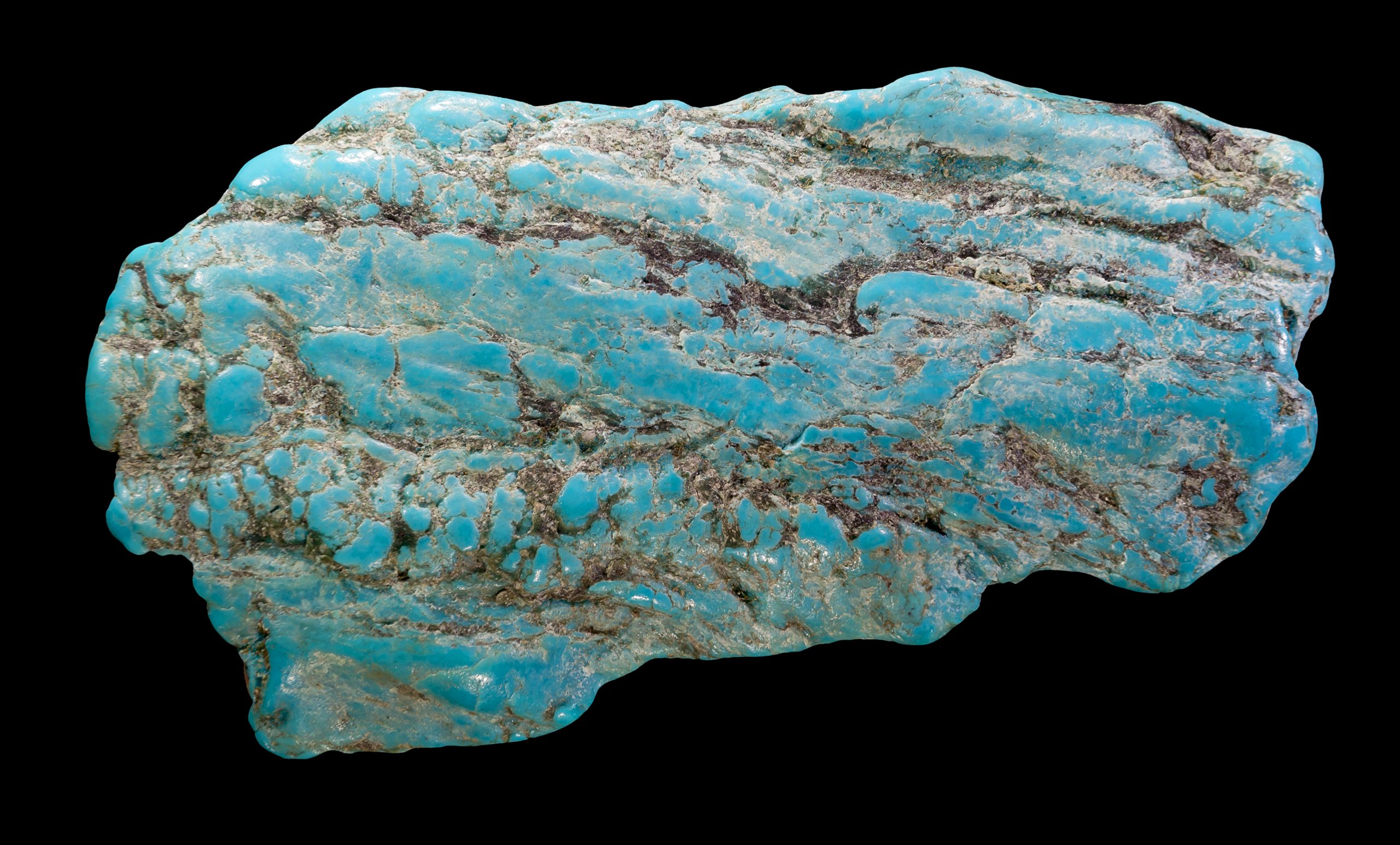
Manufactured substitutes also exist. GIA describes plastic and ceramic materials used to imitate turquoise. Consequently, a household check aimed at detecting just one substitute cannot rule out all the others. GIA: An Introduction to Imitation Gems
Skip these home “authenticity tests”
Do not use nail-polish remover, a hot needle, flame, or a scratch test on jewelry you want to preserve. GIA warns that heat and solvents can damage treated turquoise surfaces; chemicals can also affect its color. Scratching is a damage-producing test, not a harmless inspection. GIA: Turquoise Care and Cleaning
A missing reaction is not a positive identification. Likewise, any observed color transfer would not answer every question about the underlying material. Do not turn “nothing happened” into “proven genuine and untreated.”
Feeling cool, sticking to a tongue, or looking convincing under a phone flashlight is not a substitute for identification. We do not recommend licking, soaking, or otherwise experimenting on an unknown item to force a yes/no answer.
For other unknown stones, our non-destructive crystal identification guide explains how to organize observations before seeking further help.
Questions buyers often ask
Is stabilized turquoise real turquoise?
When the description is accurate, the underlying material is turquoise, but it has been treated. It should not be represented as untreated. Ask what stabilization involved rather than treating “stabilized” and “fake” as synonyms.
Can real turquoise have no veins?
Yes. Matrix-free turquoise exists. Neither having veins nor lacking them is a stand-alone authenticity test.
How can I tell if turquoise beads are real?
Start with the strand’s written description and inspect several beads without altering them. Photograph the surface and accessible drill-hole rims, then ask about any unexplained features. If certainty matters, discuss the strand—not just one selected bead—with a qualified examiner.
Can a picture identify turquoise or its mine?
A picture can support a discussion of possible materials. It cannot, by itself, establish identity, treatment status, or mine provenance. Ask for documentation supporting any specific origin claim rather than matching colors to an online chart.
Does a high price prove authenticity?
No. Price is an offer, not an identification result. Before paying more for an untreated or named-mine claim, decide what evidence you need and whether it has been supplied.
The bottom line
The best first question is not just “Is this real?” It is “What is this material, what treatments are present, and what evidence supports that description?” Document what you have, avoid damaging tests, and seek an appropriate examination when the remaining uncertainty matters.
This is a source-based educational guide, not a laboratory identification or appraisal of your item. The observation checklist is an editorial aid, not a validated diagnostic test. See our sources and methodology.
Reference databases
Property and care guidance is checked against established mineralogical and gemological references. See our sources and methodology.