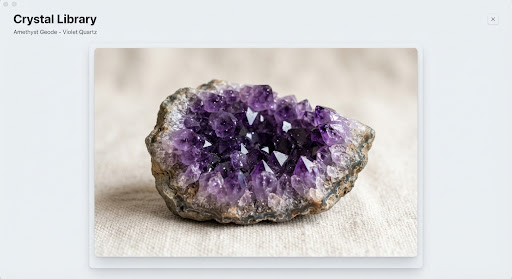
Amethyst
Violet quartz with glassy luster and conchoidal fracture. Classic hexagonal prism terminations with color zoning from iron irradiation.
None (Conchoidal)
View crystal guide arrow_forward
Browse practical identification notes, mineral facts, care guidance, and clearly labeled traditional symbolism. Rigorous mineralogy balanced with historical reverence.
Try broadening your search term or clearing one of the specific geological filters.
Violet quartz with glassy luster and conchoidal fracture. Classic hexagonal prism terminations with color zoning from iron irradiation.
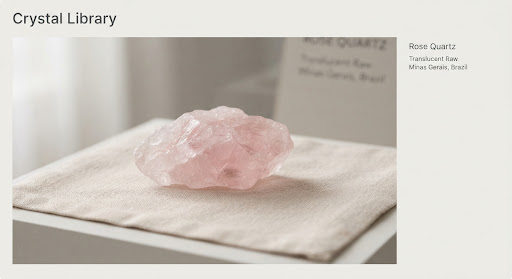
Soft pink color from microscopic mineral inclusions, usually massive without crystal faces. Displays hazy translucence and gentle luster.
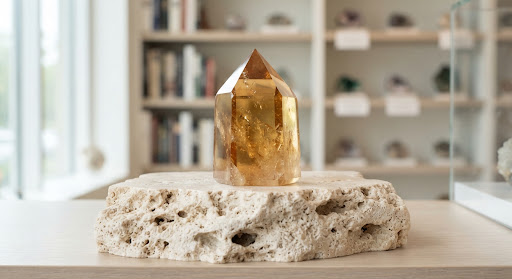
Pale golden to deep amber quartz point; natural citrine displays subtle dichroism and clear crystalline structures without burnt white bases.
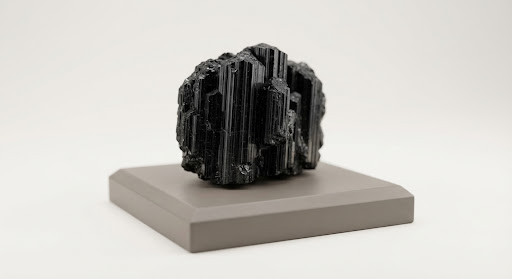
Dense black prismatic crystals with vertical striations (ridges) along edges. Features pyroelectric and piezoelectric charge retention.
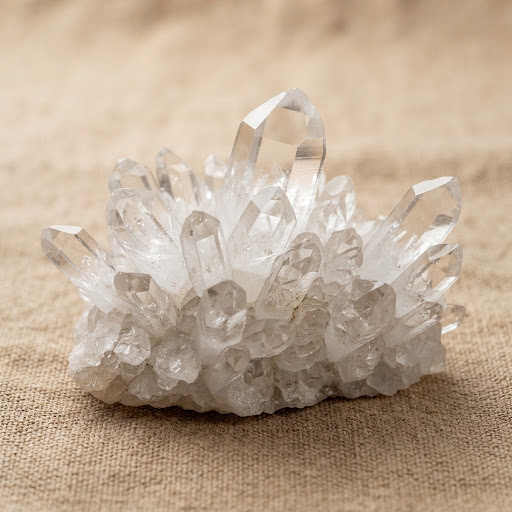
Transparent hexagonal prism terminating in a 6-sided pyramid point. Pure silicon dioxide with glassy luster and zero cleavage planes.

Distinct cubic cleavage steps; much softer than quartz and easily scratched by copper/iron. Exhibits brilliant UV fluorescence.

Lilac purple scaly/flaky micaceous sheets with pearly luster, flakes off with a fingernail. Rich in lithium; delicate physical cohesion.
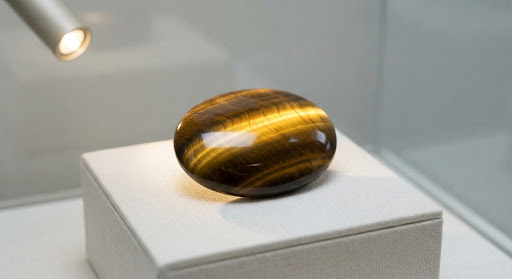
Silky chatoyancy (cat's eye effect) with warm golden-brown parallel fibrous bands. Crocidolite asbestos completely replaced by quartz.
Answer five visual questions about color streak, transparency, luster, and surface cleavage in our guided specimen identifier to accurately diagnose raw or tumbled minerals.
Alphabetical reference directory spanning geological specimens and silica minerals.
Each published guide lists its mineral references and separates physical properties from historical folklore. Visual guides do not replace professional gemological testing.