Identification & care guide
Types of Turquoise: Color, Treatment, and Origin
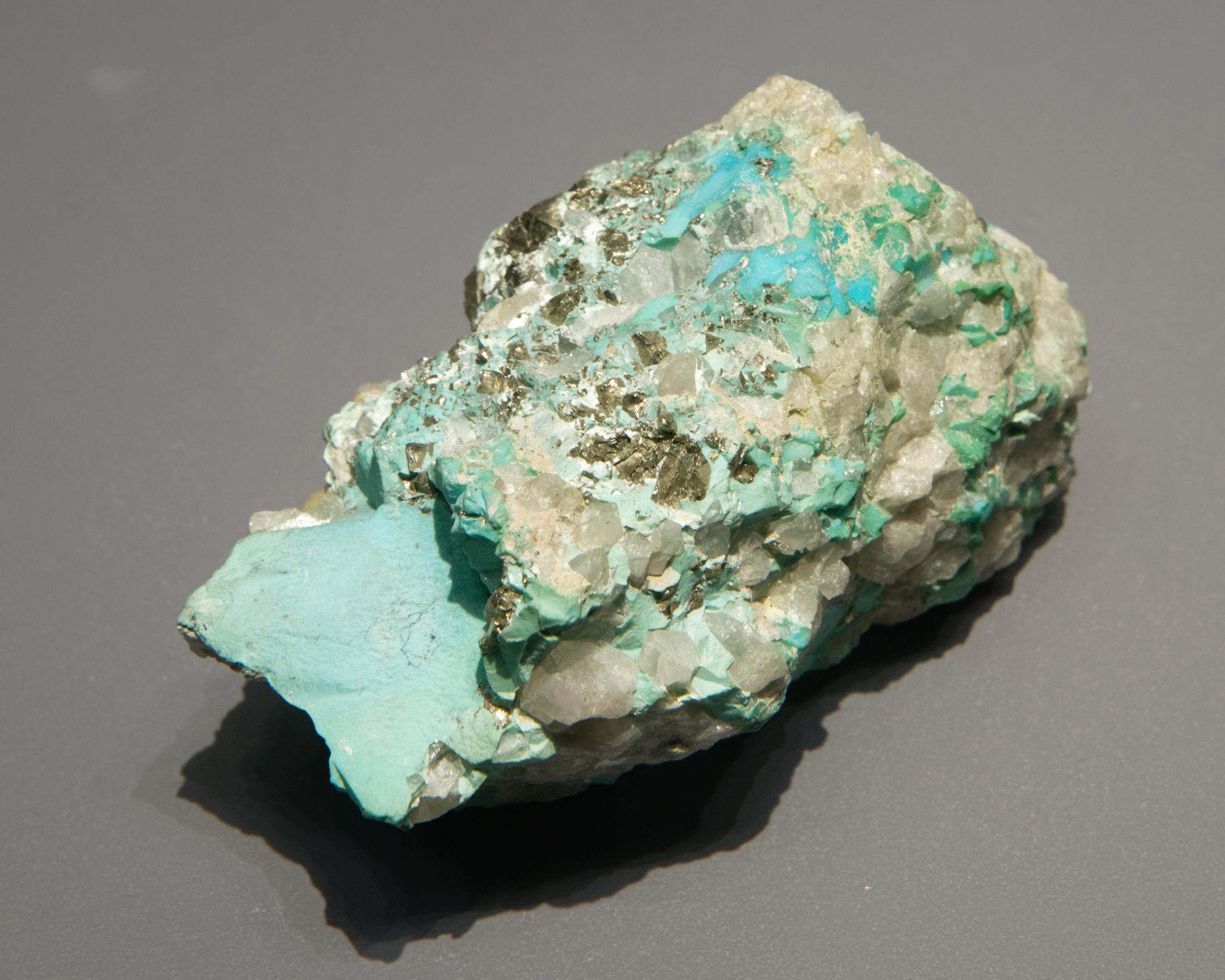
There is more than one way to describe the types of turquoise. Blue and green refer to appearance. Spiderweb describes a pattern. Stabilized refers to treatment. Sleeping Beauty is a mine name. These labels can appear together because they answer different questions.
The most useful approach is to read each label in layers. First establish the material, then its treatment, then appearance, and finally any documented origin. This guide organizes common terms without claiming that a photograph can identify a mine.
The four kinds of information on a turquoise label
On small screens, swipe the table sideways to compare all columns.
| Label or description | Category | Question to ask |
|---|---|---|
| Blue or green turquoise | Color | Is this the item’s actual color under ordinary light? |
| Spiderweb turquoise | Pattern | Is the material identified and the treatment disclosed? |
| Stabilized turquoise | Treatment | What process or added material is disclosed? |
| Dyed turquoise | Color treatment | Is dye the only treatment or one of several? |
| Sleeping Beauty turquoise | Claimed origin | What supports attribution to this mine? |
| Persian blue | Color language | Is this a color description or a documented Iranian origin? |
A single stone might have a pattern, a treatment, and a locality. Do not count those labels as mutually exclusive species.
Blue green and spiderweb turquoise
GIA describes turquoise in blue through greenish-blue colors, sometimes with mottling or remnants of host rock called matrix. Fine web-like matrix creates the appearance described as spiderweb. Smooth, even blue material is another familiar look; GIA illustrates it with turquoise from Arizona’s Sleeping Beauty Mine. GIA turquoise quality factors.
Neither a clean surface nor dark webbing establishes authenticity by itself. Use a color or pattern name to describe what attracts you, then ask for evidence about the material.
For example, a buyer who likes visible matrix should not be talked out of that preference merely because another listing emphasizes an even blue color. Appearance preferences and gemological identification are different decisions.
Natural origin does not automatically mean untreated
Turquoise can undergo treatments intended to change appearance or durability. In a published investigation, gemologists documented a turquoise specimen that was both impregnated and dyed. The study also describes polymer, wax, and other treatment approaches. Impregnated and Dyed Turquoise.
That example matters because “stabilized” and “dyed” should not be treated as exclusive alternatives. Ask about all disclosed treatments rather than stopping after the first reassuring answer. A treatment description should be specific enough that you know what is being offered; “enhanced” alone leaves room for clarification.
A treated turquoise item can still be a legitimate purchase when accurately represented. It should not be compared with an untreated claim as if the descriptions were identical.
Why newer treatment names need careful reading
Research on porcelain-treated turquoise describes a silicon-containing treatment and shows why appearance alone is insufficient for reliable separation from untreated material. The researchers used multiple observations and analytical methods, not a single visual trick. GIA published study of porcelain-treated turquoise.
For a shopper, the practical lesson is to request a plain-language treatment explanation. Do not assume that every unfamiliar treatment name means the same process, and do not copy a laboratory sampling procedure onto your own jewelry.
Mine names and color names are not the same thing
“Persian blue” is a particularly useful example. GIA explains that the trade uses this color description even when the turquoise was not mined in Iran. The phrase therefore cannot carry the whole burden of an origin claim.
If a seller names a particular mine, ask how the attribution is known and whether it appears on the invoice. Save the original listing and supporting records. A close visual match to a reference photograph is not an independent chain of provenance.
This is also why this guide does not offer a “match the webbing to the mine” identification chart. Such a chart could look decisive while answering a question the photograph cannot settle.
Comparing two listings fairly
Suppose one cabochon is listed as stabilized turquoise of unspecified origin, while another is advertised as untreated turquoise from a named mine. Before comparing their prices, write down what is actually documented for each.
Use these headings in your notes:
- Material identification and who provided it.
- All disclosed treatments, or an explicit statement that they are unknown.
- Dimensions, condition, and photographs of the exact piece.
- Origin claim and the records supporting it.
- Return terms and any opportunity for independent examination.
A detailed description is more useful than a long string of prestige adjectives. If a seller cannot resolve a question, keep it marked unknown rather than filling the gap with an assumption.
Where to go next
If your main question is whether an existing item is turquoise at all, use our guide to telling whether turquoise is real. That article covers observation limits and the next steps for verification.
For choosing among turquoise descriptions, keep the four categories separate: material and treatment, appearance, and documented origin. A well-described stone should not require you to guess which meaning a name is carrying.
Related identification guides
How to Tell If Turquoise Is Real · How to Tell If Jade Is Real: Safe Checks · Crystal identification chart
Reference databases
Property and care guidance is checked against established mineralogical and gemological references. See our sources and methodology.