
Crystal Compass
Selenite and Black Tourmaline Together: Placement & Care
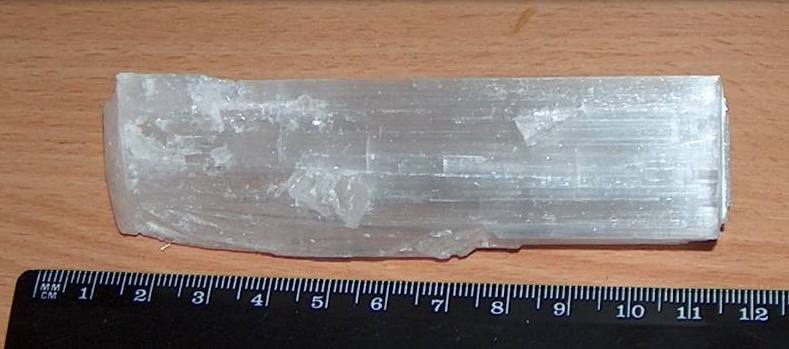
Selenite and black tourmaline can share a display, but avoid rubbing them together or packing them loose in one pouch. The main practical issue is a soft gypsum surface against a much harder stone. Separate, stable supports are a better default than stacking black tourmaline on a thin selenite plate.
Updated October 19, 2026. A source-based guide, not a laboratory identification or a report on a specimen tested by Crystal Compass.
Placement diagram · Wearing and storage · Cleaning · Meaning and charging

Why this pair needs more than a “compatible” label
The MSA Handbook records gypsum hardness around 1.5–2 and schorl, a common black tourmaline, at 7. It also describes schorl as brittle. This means the pair is not simply “soft stone plus indestructible stone.” Hardness helps anticipate scratching; shape, contact pressure, existing cracks and movement still matter. Sources: gypsum and schorl.
Our placement recommendations below are conservative handling guidance derived from those properties. They are not results of a timed experiment, and we cannot predict exactly when a particular plate will scratch.
Can black tourmaline sit on a selenite plate?
Direct contact creates avoidable scratch risk, especially if the tourmaline has rough edges or the plate is dragged while loaded. A lightweight, motionless item is a different situation from a heavy rough specimen, but no direct-contact arrangement is guaranteed damage-free. The simplest option is to put both on the same tray with their own supports.
Own soft support
Protect thin edges
Own stable support
No weight on gypsum
If you choose a layered display, use a clean, soft barrier and independent support for the heavier object. A barrier can trap grit and does not turn a thin gypsum plate into a load-bearing stand. Check the arrangement before moving it; lift the stones off individually rather than sliding them.
Five everyday scenarios
1. Shelf or desk display — reasonable with separation
Choose a stable, dry surface away from spills, shelf edges and direct heat. Place each piece on a suitable support. You do not need direct contact to enjoy the black-and-white arrangement.
2. Two separate pieces of jewelry — assess each piece
Check settings and whether the pieces strike each other during movement. Gypsum is a fragile choice for frequent wear; occasional protected use is different from a bracelet that is repeatedly knocked against a desk.
3. Both materials on one loose bead strand — not our default recommendation
The softer beads can be exposed to repeated rubbing. Spacers do not automatically prevent every contact point. Ask a jeweler to assess the actual construction, or keep the gypsum as a display object instead.
4. Carrying them in a bag — use separate padded spaces
A shared pouch lets stones collide. Wrap each separately or use a divided box. Do not put a heavy rough piece above a thin gypsum slab where bag pressure can transfer its weight.
5. Moving a display — disassemble first
Lift one object at a time, supporting its base. Avoid pulling a cloth or tray out from underneath a loaded plate. Check for a new chip or loose fragment before returning the display to use.
How to clean this pair
Do not clean them together in a bowl of water. Gypsum is somewhat water-soluble, as described by the University of Minnesota. Keeping the pair dry is the conservative shared rule, not proof that both minerals have identical care requirements.
- Separate the objects and check for loose pieces.
- For sound surfaces, gently lift loose dust using a clean soft cloth or brush. Do not scrub fibrous gypsum or force dust from a crack.
- If the tourmaline is set in jewelry, follow the maker’s instructions for the entire piece, including metal, glue and cord. Unknown coatings or treatments require extra caution.
- Let any accidentally damp item dry without heating. Do not use a hair dryer, steam cleaner or ultrasonic machine on the paired arrangement.
More detail: selenite and satin spar identification, selenite water care, and black tourmaline properties.
What about meaning, protection and “charging”?
In modern crystal practice, people may use this light-and-dark pairing as a symbol of clearing and protection. Treat that as a personal or spiritual interpretation. It does not establish disease treatment, electromagnetic shielding or a measurable transfer of energy.
If a quiet ritual is meaningful to you, place the stones separately and use the moment to reflect or write down an intention. There is no need to claim that the gypsum physically cleans the other stone. Actual dirt still needs appropriate care, and a symbolic practice does not require damaging contact.
Quick decision
Display together; handle separately; avoid direct rubbing; do not soak together. If your question concerns a particular bracelet or plate, photograph the contact points and ask the maker about its construction rather than relying only on mineral names.
Compare other pairs with the pairing checker, browse pairing guides, or read which combinations need extra care.