
Crystal Compass
Citrine Identification: Natural Color, Treatments & Look-Alikes
Updated October 19, 2026. A source-based guide, not a laboratory identification or a report on a specimen tested by Crystal Compass.
Citrine is yellow-to-orange quartz, but a yellow stone is not automatically citrine, and a photograph cannot reliably establish whether its color is natural or produced by treatment. This guide helps you record useful observations, distinguish the main seller claims, and decide when a gemologist’s report is worth obtaining.
Quick answer: Treat color and crystal shape as clues, not certificates. Ask separately about the material, whether it formed naturally, and any color treatment. Heat-treated natural quartz is not the same thing as glass or laboratory-grown quartz.

What exactly does “real citrine” mean?
The phrase mixes three questions. Separating them is more useful than assigning a stone a single real-or-fake label.
- Material: Is it quartz, or a different material sold as quartz?
- Origin: Did the quartz grow in nature or in a laboratory?
- Color: Is the yellow color natural, or was it produced or changed by treatment?
Much commercial citrine is heated amethyst. That is treated natural quartz when the starting crystal is natural; it should not be described as untreated natural-color citrine. Glass that resembles citrine is an imitation. Laboratory-grown quartz is another category again. Honest disclosure matters more than an attractive trade name.
A non-destructive inspection you can do before buying
- Start with the listing. Save its exact material name, treatment statement, dimensions, seller photographs and return terms. “Genuine,” “AAA” and “Brazilian” do not answer all three questions above.
- Look under neutral light. Compare the stone on a white or gray background in diffuse daylight and ordinary indoor light. Warm lighting and edited photographs can exaggerate yellow and orange. Do not judge a stone from one heavily backlit picture.
- Record color distribution. Note whether color is even, patchy, strongest at crystal tips, or absent near the base. These observations can guide questions, but none alone proves heating or natural color.
- Inspect the surface and interior. With a loupe, look for chips, joined pieces, coatings, repeated mold-like surfaces or visible inclusions. Record what you see without assigning an identity from a single feature. Bubbles or cracks can be misread by beginners.
- Choose the next step based on value. For an inexpensive decorative specimen, a clear description and return policy may meet your needs. For a premium natural-color claim, ask an independent gemologist what can actually be established and whether a laboratory report addresses treatment.
Do not scratch another stone, apply acid, heat the specimen, or place it in an oven to “test” it. A hardness experiment can damage a finished gem without answering its color origin. Our crystal identification guide provides a broader starting point; use documented observations before destructive tests.

Rough clusters and faceted gems need different questions
For rough specimens and clusters
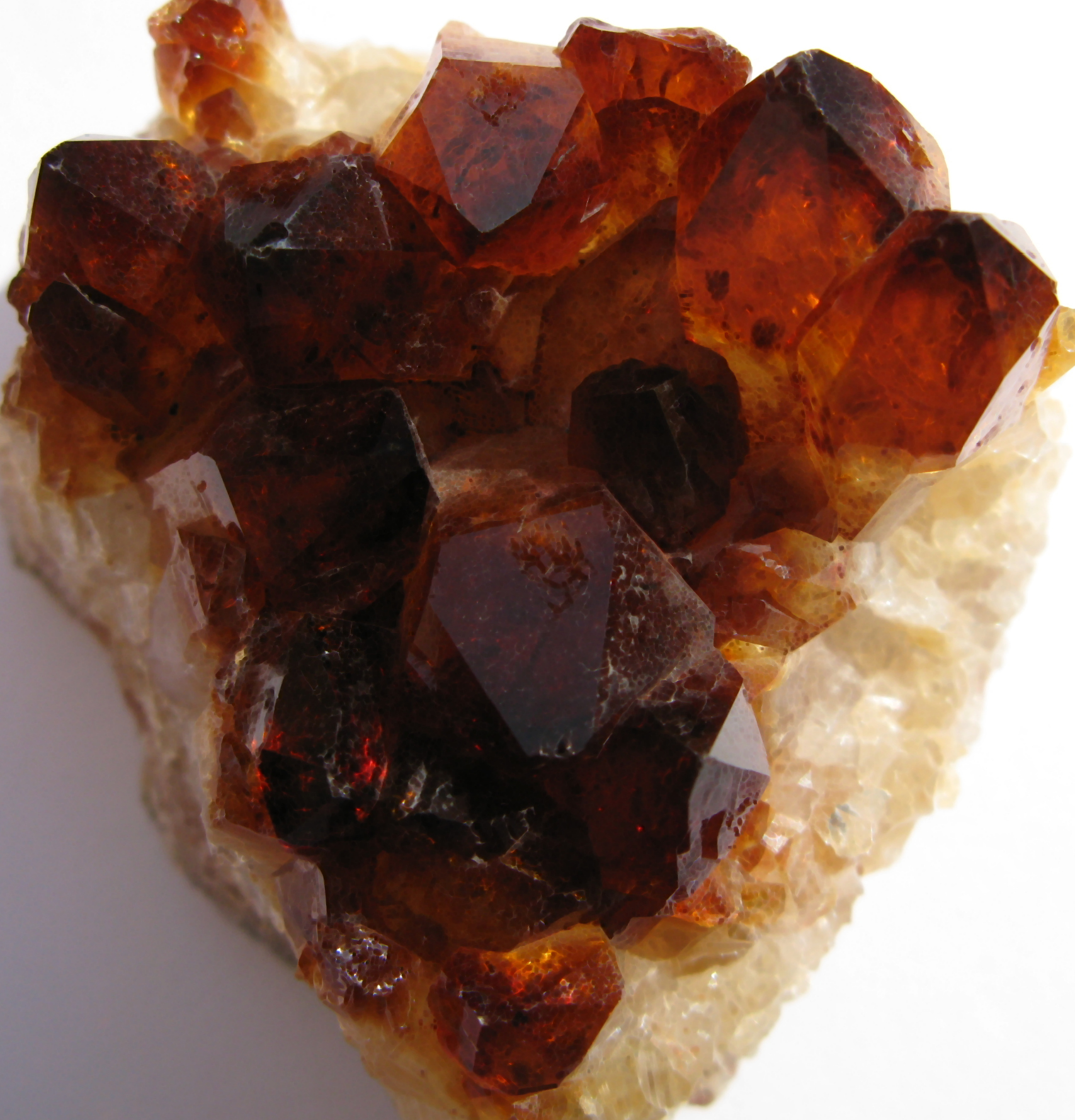
A crystal’s shape, matrix and color distribution provide context. Strong orange-brown tips on a pale base are a reason to ask about heating, not a conclusive home test. Do not assume every dark specimen is treated or every pale specimen is untreated. A dealer who can describe the specimen’s source and known processing is more informative than a seller relying only on “rare” or “high vibration.”
For faceted stones and jewelry
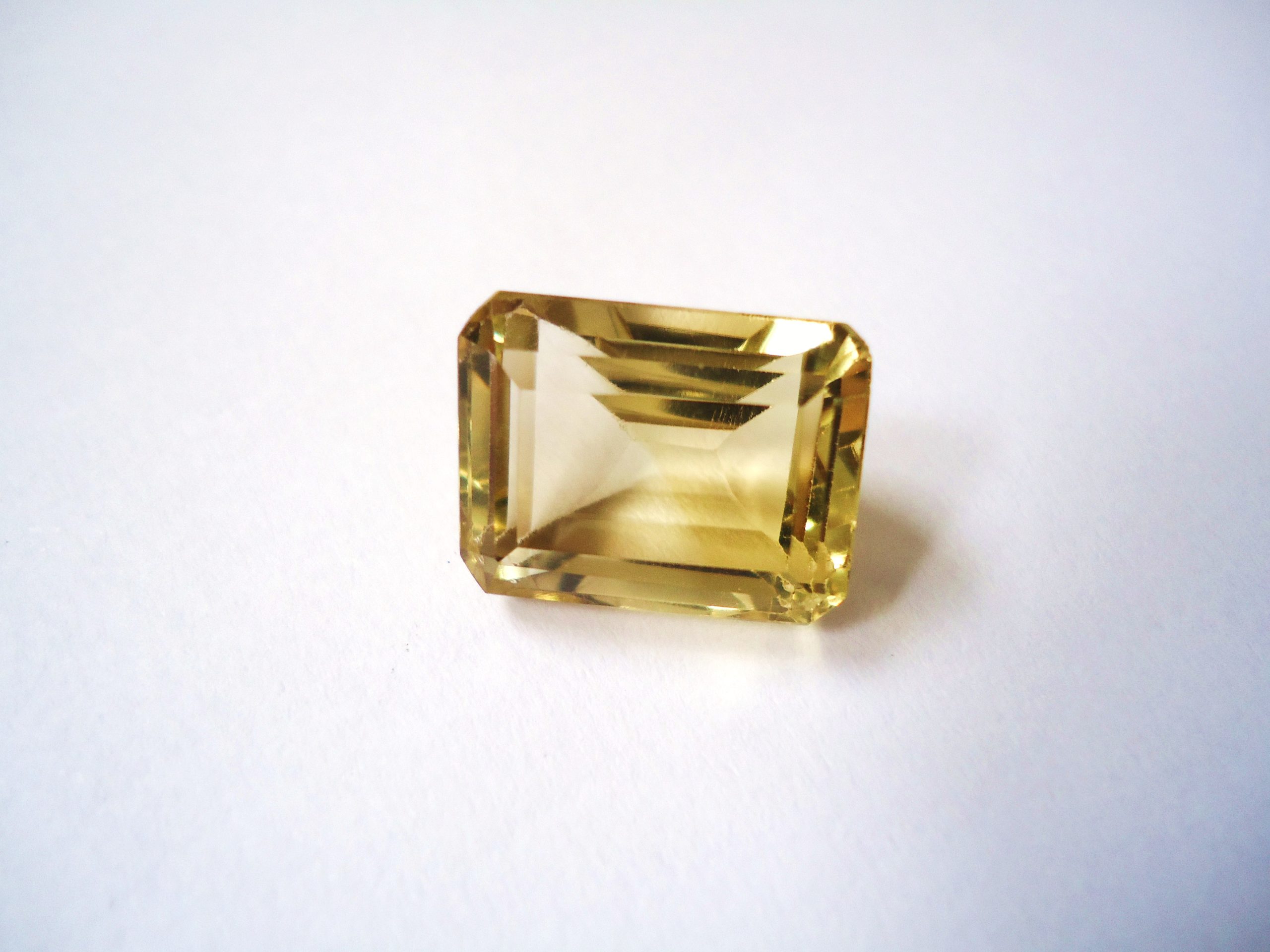
A cut stone may have little visible evidence of its original crystal shape. Yellow topaz, other yellow gems and glass can resemble citrine in a photograph. A trained examiner can combine refractive measurements, magnification and other appropriate tests. Material identification and the determination of color origin are separate tasks: ask which conclusion a report supports.
Common claims and what they do not prove
- “It scratches glass.” Many materials can do that. It does not establish citrine identity or treatment history.
- “It feels cold.” Temperature depends on the environment, size and material. It is not a reliable natural-versus-synthetic test.
- “It has no bubbles.” Absence of visible bubbles does not prove natural quartz.
- “It is pale yellow.” Color alone does not certify that it is untreated.
- “It is expensive.” Price is a seller’s decision, not a laboratory result.
For a closer comparison of the two common trade categories, read natural citrine versus heat-treated amethyst. Our amethyst identification guide explains why quartz identity is not the same as proof of natural origin.
Cleaning and everyday care
Citrine has Mohs hardness 7, but hardness is resistance to scratching, not immunity to chipping. Keep separate pockets or soft dividers between loose stones. Inspect a jewelry setting before cleaning, and account for any other stones, glue or coatings in the piece.
GIA recommends warm soapy water for citrine and warns against steam cleaning. For a specimen with an unknown treatment history, keep cleaning conservative and ask the supplier before using ultrasonic equipment. Avoid sudden temperature changes and prolonged display in strong sunlight. Do not assume a cleaning method suitable for quartz is suitable for its matrix or neighboring minerals.
Questions to send the seller
- Is this natural quartz, laboratory-grown quartz, or an imitation?
- Has the color been changed by heating, irradiation, coating or another process?
- What evidence supports an untreated or natural-color claim?
- Is the photograph of the exact item, and can I see it under neutral light?
- May I return it if independent examination contradicts the written description?
Frequently asked questions
Is heat-treated amethyst fake citrine?
It is commonly sold as citrine in the gem trade, but treatment should be disclosed. It is not equivalent to untreated natural-color citrine. Calling every heated specimen glass or synthetic would also be inaccurate.
Can an identification app confirm natural citrine?
No photograph-based identification can provide the same information as examining a stone. An app’s suggestion is a starting point, not a treatment or origin certificate.
Does citrine bring money or luck?
Those are symbolic beliefs, not mineral-identification facts or demonstrated financial outcomes. You can enjoy the symbolism without using it as evidence of authenticity or a reason to pay a premium.
Continue with related guides
Browse the crystal library to compare materials. If you wear several stones, see carnelian and citrine and citrine and tiger’s eye; evaluate practical wear and care separately from traditional meanings.
Sources and image notes
This editorial guide draws on Gem-A’s discussion of testing natural citrine and GIA’s citrine care guidance. No specimen shown here was tested by Crystal Compass. Image creators and licenses appear beside each photograph. Photographs illustrate appearances; they do not establish treatment, origin or a laboratory identification.