Identification & care guide
How to Tell If Jade Is Real: Safe Checks
To tell if jade is real, separate three questions: What is the material? Has it been treated? Does the seller’s description match the evidence? Looking at a stone can help you decide what to ask next, but a flashlight, a cool feel, or a seller’s “Type A” label cannot settle all three questions. For a purchase that matters to you, request independent identification and treatment testing.
Start with the checks below. You do not need to scratch, heat, or damage your jewelry to use them.
What counts as real jade?
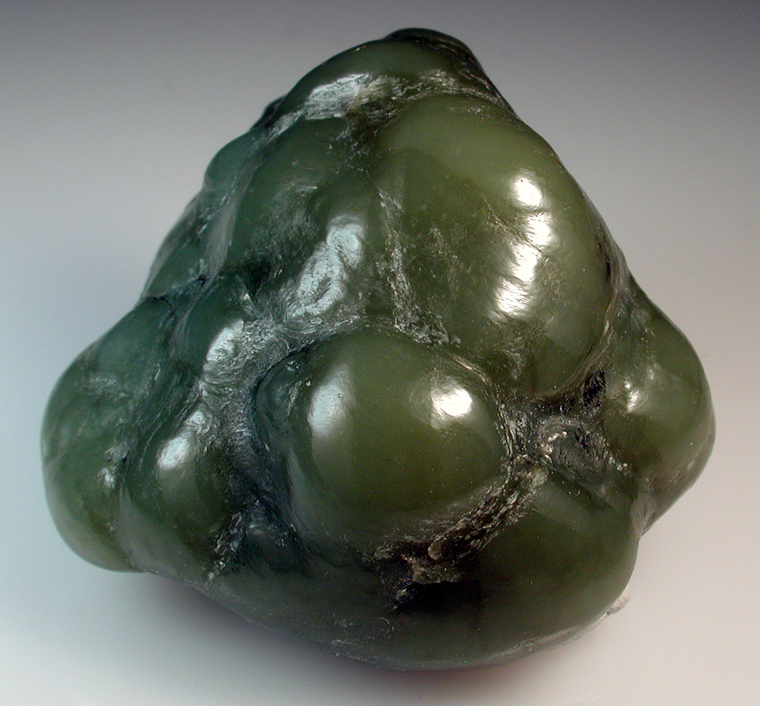
Jadeite and nephrite are both genuine jade materials. Neither has to be green: their colors include white and other shades. Jade is an aggregate of interlocking mineral crystals, rather than a single crystal. There is also a naming nuance: certain green omphacite materials can qualify as jade under specific conditions. GIA’s jade description explains these distinctions.
This is why “it is a natural stone” is not a complete answer. An imitation can itself be natural, while still being a different material from the gem it resembles. Manmade substitutes also exist; GIA documents plastic among materials used to imitate jade. GIA: imitation gem materials.
Use three separate lines in your notes:
- Identity: What material is it actually made from?
- Treatment: What, if anything, was done to alter it?
- Quality and price: Is this particular piece worth the asking price to you?
An answer to one line should not automatically fill in the others.
How to check jade at home without damaging it
Think of this as a documentation checklist, not a pass-or-fail authenticity test. Its purpose is to help you make a better purchase decision or explain your concerns to a gemologist.
1. Save the exact claim
Before handling or cleaning the piece, save the listing, receipt, photographs, and return deadline. Write down whether the seller promises jadeite, nephrite, untreated jade, or simply “jade.” Keep the original wording rather than replacing it with your interpretation.
If the description is vague, ask for the material name and treatment disclosure in writing. A reassuring conversation is harder to check later than a clear statement attached to the item.
2. Photograph the whole item
Use ordinary daylight and a plain background. For a bangle, photograph the outside, inside, and both edges. For a pendant, include the back, drilled hole, and any setting that obscures the stone. Avoid filters.
Record existing chips, cracks, unusual color patches, or apparent joins. Do not create a fresh scratch or chip to inspect the interior. These photographs document condition and give you specific features to ask about; they do not identify the material on their own.
3. Inspect details, then keep the conclusion narrow
A magnifier can help you describe what you see. It should not turn an uncertain observation into a confident diagnosis. For example, write “dark line visible beside the hole,” not “definitely dyed,” unless that conclusion has been established by appropriate examination.
On small screens, swipe the table sideways to compare all columns.
| What you notice | What it establishes | Useful next step |
|---|---|---|
| The listing only says “natural jade” | The seller’s claim is incomplete | Ask for identity and treatment details |
| An existing crack or apparent join | A feature worth documenting | Photograph it and request an explanation |
| Light passes through an edge | That area transmits visible light | Do not treat it as authentication |
| A card says “Type A” | Someone has made a treatment claim | Check who issued it and what was tested |
| A report looks different from the item | A possible matching problem | Resolve it with the issuer before relying on it |
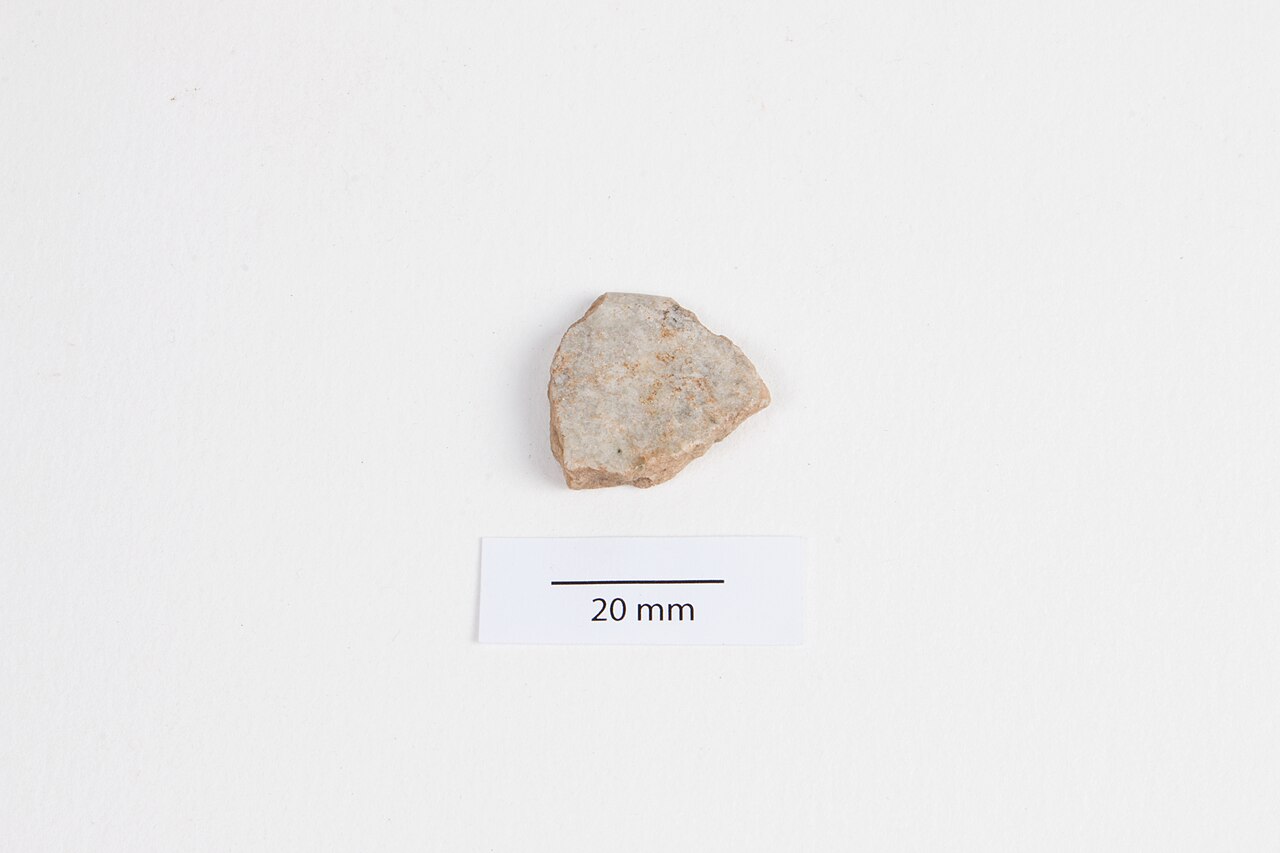
For a broader observation workflow, see how to identify a crystal without damaging it.
Can you tell if jade is real with a flashlight?
A flashlight is an observation aid, not an authenticity certificate. Jadeite ranges from opaque to semitransparent, so “real jade must let light through” is not a reliable rule. Transparency is also a quality consideration, not a stand-alone identity test. GIA’s jade quality guide.
If you want to document the appearance, use a cool-running white LED light briefly at the side or behind the piece. Do not heat the jewelry or press equipment against a fragile edge. Compare the same area in ordinary light and backlighting, and note what becomes easier to see.
Your useful result is a description such as “light passes through this thin edge.” It is not “this is untreated jadeite.” Avoid comparing a thin pendant with a thick bangle as if identical illumination should produce identical photographs.
For example, imagine a seller’s video shows a glowing green bangle and a “Type A” card. The video shows its appearance under that lighting. Your next step is still to request the identification and treatment evidence for that specific bangle—not to count the glow as a second certificate.
Type A, B, and C jade: treatment labels, not quality grades
In jadeite trading, these letters describe treatment status. Type A generally allows traditional surface waxing after cutting and polishing; Type B refers to bleaching followed by impregnation; Type C means dyed. They are not a ladder from excellent to poor craftsmanship. GIA’s jade buying guide.
On small screens, swipe the table sideways to compare all columns.
| Label | Treatment meaning | Do not assume |
|---|---|---|
| Type A | No enhancement beyond accepted traditional finishing, including surface waxing | Automatically beautiful, valuable, or independently verified |
| Type B | Bleached and impregnated | The stone is an entirely different mineral |
| Type C | Dyed | The color is natural |
| B+C | Both bleaching/impregnation and dyeing | Only one treatment needs disclosure |
There is an important wax distinction. Traditional surface finishing is not the same as substantial wax impregnation after bleaching. A published laboratory case identified a wax-impregnated bangle as B-jade using microscopic examination and infrared analysis. Consequently, “it only contains wax” is not enough to establish Type A status. Gems & Gemology: wax-impregnated B-jade.
Ask what the label means for the actual piece, who determined it, and whether the supporting report addresses treatment. Do not let a prominent letter replace those answers.
Skip scratch, flame, and chemical tests
We do not recommend scratching a bangle with a knife, rubbing it against glass, striking it to judge its sound, burning hair against it, or applying acetone to look for dye. Nor should “feels cold” be treated as a verdict.
Jade is exceptionally tough, but toughness does not mean scratch-proof or heat-proof. GIA notes that jade can be scratched and that high heat and some chemical exposure can cause damage. GIA’s jade care guidance.
For an unidentified purchase, keep its condition unchanged while you clarify the seller’s claim. Ask a qualified examiner about safe handling before attempting cleaning or testing, particularly when a setting or possible treatment complicates the situation.
When to get a professional jade test
Seek independent testing when treatment status affects your buying decision, a return deadline is approaching, the documents conflict, or the item has significant financial or sentimental importance.
Ask the laboratory: “Can you identify this material and examine it for dyeing, bleaching, and impregnation? Can you test it in its current mounting?” Request the cost, turnaround, and limitations before sending anything.
Treatment detection can require instruments beyond home observation. Published GIA research on polymer-impregnated jadeite explains the role of infrared spectroscopy in detecting impregnation. That is a useful reason not to equate a clean-looking surface with absence of treatment. Gems & Gemology: identification of treated jadeite.
Check that the report belongs to your piece
As one example, a GIA colored-stone identification report includes gem identity, detectable treatments, a photograph, and descriptive details such as shape, measurements, and weight. Read the findings, not just the laboratory logo. GIA sample identification reports.
- Compare the photograph, shape, dimensions, and other applicable details with the item.
- Verify the report through the issuing laboratory’s own website or contact details you obtain independently.
- Ask the issuer about discrepancies or unclear treatment wording.
- Remember that a valid report number does not, by itself, prove that the item in your hand is the one examined.
Questions to send the seller
Copy this message and adapt it to your purchase:
Please confirm the material identity and disclose any dyeing, bleaching, impregnation, or coating. Is there an independent report for this exact piece? If so, please send the complete report and clear item photographs. Please also confirm the return deadline and whether independent testing is permitted during the return period.
If the answer remains unclear, pause the purchase. You do not need to prove an item is fake before deciding that its documentation is insufficient for you.
Frequently asked questions
Can white jade be real?
Yes. Both jadeite and nephrite can be white. Color alone does not identify a white stone as jade; the material still needs to be established.
Can real jade be opaque?
Yes. Lack of visible transmission in a flashlight check does not automatically mean fake jade.
Is Type A jade always expensive?
No price conclusion follows from the letter alone. It concerns treatment, while appearance and other quality considerations are separate. First verify the claim; then evaluate the particular piece.
How can I tell if a jade bangle is real?
Start with the seller’s written identification, treatment disclosure, condition photographs, and any matching report. When those do not resolve the question, obtain independent testing rather than striking or scratching the bangle.
Can you authenticate jade from a photograph?
This guide cannot authenticate your item from a photograph. Images are useful for documenting appearance and framing questions, but they do not replace material identification and treatment testing.
The bottom line
The most useful home check is not a dramatic trick: it is a clear record of the item and the claims made about it. Keep identity, treatment, and quality separate. When uncertainty matters, get an independent examination before relying on the description.
This is a source-based educational guide, not a laboratory report or appraisal. We have not tested your item. Learn how we distinguish evidence from interpretation in our sources and methodology.
Related identification guides
Jadeite vs Jade: Where Nephrite Fits · How to Tell If Turquoise Is Real · Crystal identification chart
Reference databases
Property and care guidance is checked against established mineralogical and gemological references. See our sources and methodology.