Identification & care guide
Jadeite vs Jade: Where Nephrite Fits
Jadeite is a kind of jade. Asking “jadeite vs jade” is therefore different from comparing two unrelated gemstones. For most jewelry shoppers, the useful comparison is jadeite jade versus nephrite jade, followed by separate questions about quality, treatment, and the accuracy of the label.
This guide explains those names. It is not a method for identifying a valuable bangle from a photograph.
The names at a glance
On small screens, swipe the table sideways to compare all columns.
| Name | How to read it | What it does not establish |
|---|---|---|
| Jade | A broader gem name | Which jade material you are buying |
| Jadeite jade | One of the principal jade materials | Untreated status or exceptional quality |
| Nephrite jade | Another principal jade material | An imitation simply because it is not jadeite |
| Imperial jade | A high-quality jadeite description | Independent verification of a seller’s claim |
| A commercial name containing jade | A claim that needs clarification | That the material is actually jade |
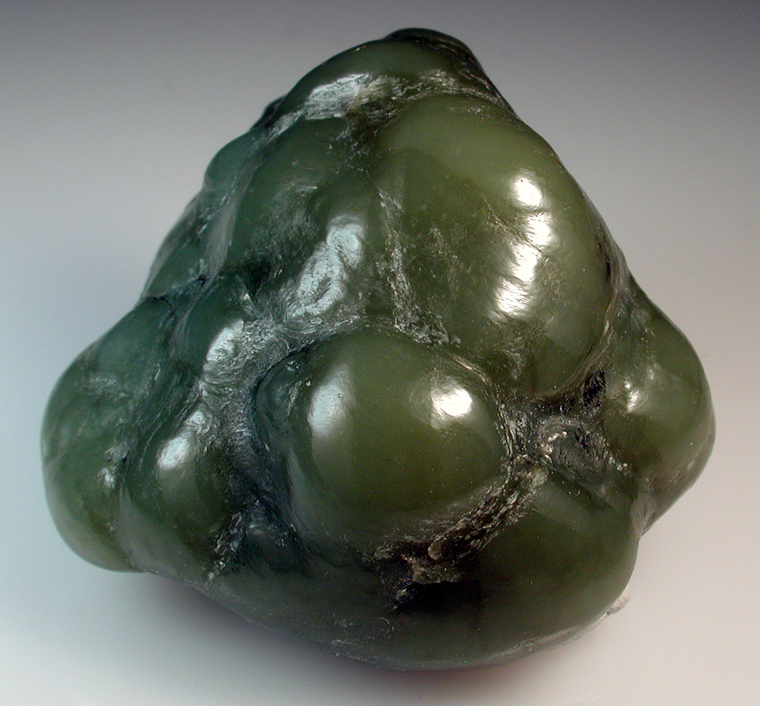
Geoscience Australia identifies jadeite and nephrite as the two materials commonly called jade, while noting their different mineral groups and structures. Its jade overview is a useful starting point. Gemological terminology also recognizes some green omphacite under the jade name; see GIA’s description. The two-material comparison is practical, but it should not be treated as an exhaustive laboratory classification.
Jadeite and nephrite are both real jade
Jadeite belongs to the pyroxene group; nephrite is associated with amphibole minerals. Both are used for carvings and jewelry. Their interlocking or fibrous structures contribute to toughness, which means resistance to breaking rather than simply resistance to scratching. Geoscience Australia explains this structural distinction in its overview linked above.
Do not translate that toughness into a hammer or drop test. A finished object can have fractures, thin edges, a delicate setting, or previous damage. An attractive carving is not a disposable mineral sample.
Nor is green color a useful pass-or-fail rule. Both materials occur in more than one color. “Jade must be green” can lead you to reject genuine material while accepting unrelated green stones.
Identity and quality answer different questions
Once an item has been identified as jadeite, its quality still needs evaluation. GIA emphasizes color, transparency, and texture when discussing jadeite value; fractures and workmanship also matter. Fine translucent green material occupies a very different market from an ordinary opaque carving. GIA jadeite quality factors.
That does not give you a reliable price from a name alone. Two objects described as jadeite can differ greatly, and a finely made nephrite carving should not be dismissed because another material has the more expensive headline examples.
For a useful comparison, place similar objects side by side: similar size, form, condition, documentation, and craftsmanship. Comparing an exceptional jadeite cabochon with an inexpensive nephrite bead strand tells you little about which particular purchase suits you.
Treatment is a separate line on your checklist
A material name and a treatment claim should be recorded separately. “Jadeite” answers one question; “untreated” answers another. A listing that establishes only the first has not automatically established the second.
Ask the seller to put both descriptions in writing. If a laboratory report is offered, check that its dimensions, photograph, and identifying details correspond to the item. Read the actual conclusion instead of relying on a seller’s summary or a photograph of an unrelated certificate.
For observation methods and their limits, use our broader safe identification guide. Keep naming questions separate from authenticity checks so you know what you still need to verify.
Beware names that only sound like jade
Geoscience Australia lists examples of ornamental materials marketed with jade names, including “Australian” or “Queensland jade” used for chrysoprase and “Indian jade” used for aventurine. These examples show why the full material description matters; the word jade inside a trade name is not sufficient evidence.
A helpful seller can explain the mineral or rock behind the product name. If the response is simply “it is genuine because the supplier calls it jade,” the original uncertainty remains.
A buying checklist you can actually use
Before deciding, record five answers:
- Material: What is the item identified as, beyond its product title?
- Treatment: What is disclosed, and what remains unknown?
- Condition: Are chips, fractures, repairs, or setting issues shown?
- Evidence: Does any report refer to this exact item?
- Purpose: Are you choosing for appearance, daily wear, carving quality, or collecting?
For example, a documented nephrite pendant may fit a personal jewelry purchase perfectly. There is no reason to upgrade to an unidentified “imperial jadeite” pendant just because its title sounds more prestigious.
Common questions
Is nephrite fake jade?
No. Nephrite is one of the main jade materials. The relevant issue is whether the seller’s description matches the actual item.
Is jadeite always better?
No single name answers that. Quality, condition, treatment, workmanship, and your purpose determine whether a particular object is a good choice.
Can a flashlight tell me which jade I have?
A light can help you observe an item, but it does not settle its mineral identity or all treatment questions. If the distinction changes what you are willing to pay, obtain appropriate identification rather than relying on a visual impression.
Related identification guides
How to Tell If Jade Is Real: Safe Checks · Opalite vs Opal: Glass, Natural Opal, and Names · Crystal identification chart
Reference databases
Property and care guidance is checked against established mineralogical and gemological references. See our sources and methodology.