Identification & care guide
Types of Jasper: Colors, Patterns, and Trade Names
Jasper variety names do not all describe the same kind of difference. Red jasper is a color description, picture jasper describes an appearance, and names such as Biggs jasper refer to a place. A useful guide should separate those meanings instead of presenting every label as a distinct mineral species.
Jasper is generally described as opaque, fine-grained silica material, often with substantial impurities. Minerals.net’s jasper reference provides a concise mineralogical starting point and examples of variety names. This article focuses on reading those names and recording what you can actually verify.
A chart of common naming styles
On small screens, swipe the table sideways to compare all columns.
| Jasper name | What the name describes | Important limit |
|---|---|---|
| Red or green jasper | Color | Color alone does not identify a specimen |
| Picture jasper | Landscape-like patterns | The resemblance is descriptive, not a fossil scene |
| Brecciated jasper | Fragments cemented together | Pattern alone does not establish locality |
| Orbicular jasper | Rounded or concentric markings | A circular pattern is not proof of a particular source |
| Ribbon or banded jasper | Stripes or bands | Banding alone does not settle the material’s identity |
| Biggs jasper | A locality-associated name | Requires a credible origin record |
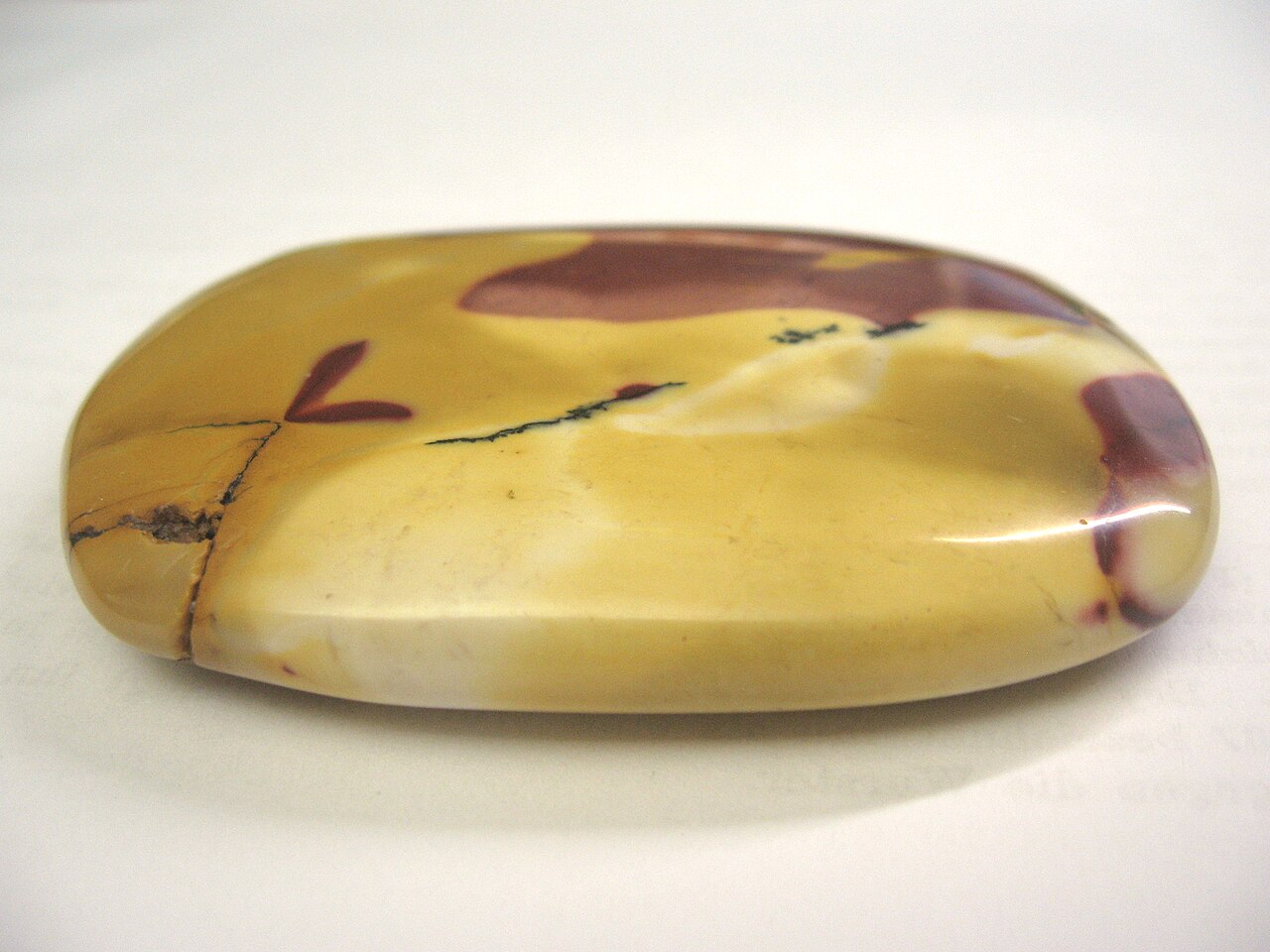
| Mookaite | A named Australian ornamental material | Keep geological and commercial descriptions distinct |
The pattern and locality examples above are documented in the Minerals.net reference. They are not a key that can authenticate any object carrying one of these labels.
Color names are the easiest to understand and the easiest to overuse
Start by recording the color you see under ordinary neutral lighting. Include a photograph of the whole specimen rather than only the most saturated patch. If an item is wet, polished, or photographed with strong colored light, note that before comparing it with a dry rough stone.
A color description should remain an observation until the material has been identified. Writing “opaque red stone, sold as red jasper” preserves useful information without turning the seller’s wording into an established fact.
Pattern names help describe a specimen
Use the chart to distinguish bands, fragments, circular markings, and scenic-looking patterns. More than one feature may appear on the same object. Photograph the feature and describe where it occurs: across the entire surface, in a narrow zone, or only on one cut face.
For instance, a stone may show broad bands on one side and a landscape-like pattern on another. Keeping both observations is more informative than arguing over which single trade name must be correct.
Do not infer a specific geological origin merely because the markings resemble a mountain, tree, animal, or ocean. A resemblance can explain a commercial name without explaining how the rock formed.
Mookaite shows why geological context matters
The Western Australian Museum’s store describes its mookaite as a Western Australian sedimentary rock derived from ancient marine sediments, with ochre, red, and white colors. Museum description of mookaite.
That is more informative than a generic “energy stone” description because it supplies a material context and geographic connection. It still does not authenticate an unrelated stone sold elsewhere. Use the museum example as a reference, not as a certificate for an item that only looks similar.
If buying mookaite, keep the seller’s original description, ask for photographs of the exact item, and record whether the location is documented or simply repeated from a supplier’s label.
Locality names need records not just matching colors
When a name includes a place, ask who assigned that locality and what information accompanies the specimen. An old collection label, a documented supplier history, and a visual guess are not equivalent kinds of evidence.
If you later learn that an identification is uncertain, do not discard the old label. Keep the original wording and add a dated correction or note. That lets a future owner understand both the history of the object and the confidence of its present description.
A five-field collection label
A practical record can be short:
- Original name: copy the seller’s or collector’s wording accurately.
- Observed features: color, bands, spots, fragments, and texture.
- Proposed identity: distinguish confirmed from provisional.
- Locality: record the source of the information, or state unknown.
- Condition and treatment: note disclosed details and unanswered questions.
For example: “Purchased as picture jasper; tan and brown scenic pattern on polished face; origin and treatment not documented.” This label is less dramatic than a sales description, but it is much more useful for later checking.
Questions about jasper types
How many types of jasper are there?
A total depends on whether you count colors, patterns, locality names, and changing trade labels separately. A long commercial list should not be mistaken for a fixed list of mineral species.
Can I identify a jasper variety from one photo?
A photograph may suggest a descriptive category. It does not independently verify the exact material, source, or treatment of the object.
What should I do with an unidentified stone?
Begin with our crystal identification chart and non-destructive observation guide. If a precise identification matters for a sale or an important collection record, seek a knowledgeable mineralogist or gemologist rather than turning a visual resemblance into certainty.
Related identification guides
Types of Agate: Patterns, Inclusions, and Names · Agate or Geode? The Difference Explained · Crystal identification chart
Reference databases
Property and care guidance is checked against established mineralogical and gemological references. See our sources and methodology.