Identification & care guide
Opalite vs Opal: Glass, Natural Opal, and Names
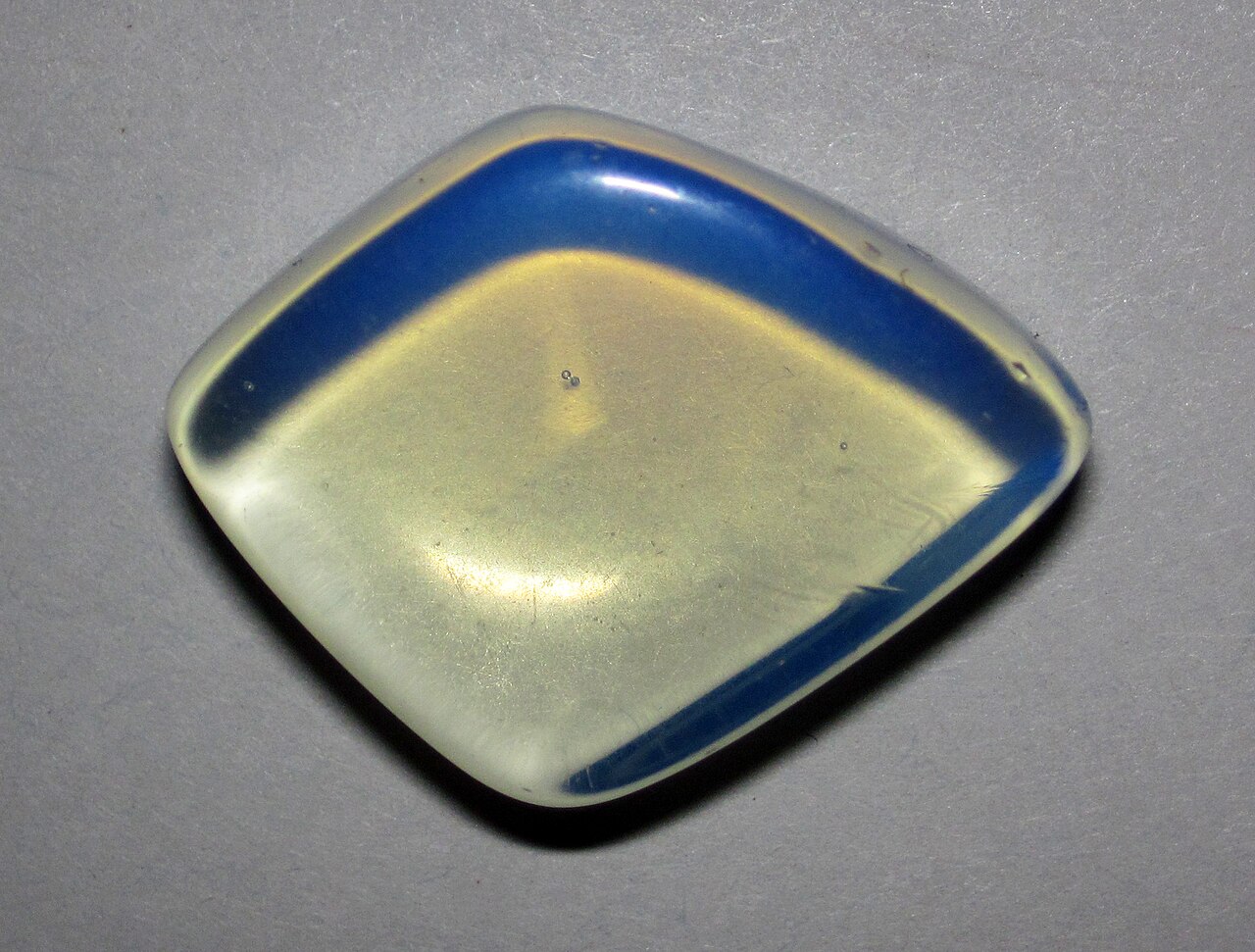
Opalite and opal are not interchangeable names. In many jewelry listings, opalite means manufactured opalescent glass. Opal is a different material, and natural opal does not always display rainbow flashes. Before comparing prices or deciding whether a stone is genuine, establish what the seller means by the name.
There is an important complication: opalite has also been used for natural common opal. Mindat records both uses of the term. A label saying only “opalite” is therefore incomplete, not an identification report.
A quick comparison
On small screens, swipe the table sideways to compare all columns.
| Label | What it tells you | What still needs checking |
|---|---|---|
| Opalite glass | A manufactured glass product | Whether the seller clearly discloses the material |
| Natural opal | A naturally formed opal | Treatment, construction, condition, and any origin claim |
| Common opal | Opal without play of color | Whether the particular item is natural and accurately described |
| Precious opal | Opal showing play of color | Natural or laboratory grown, treatment, and construction |
| Opalite with no explanation | An ambiguous commercial name | The actual material before any comparison is meaningful |
These are separate questions. “Common” is not another word for imitation, and a manufactured product is not automatically misrepresented if its description is accurate.
Why the rainbow test gets people into trouble
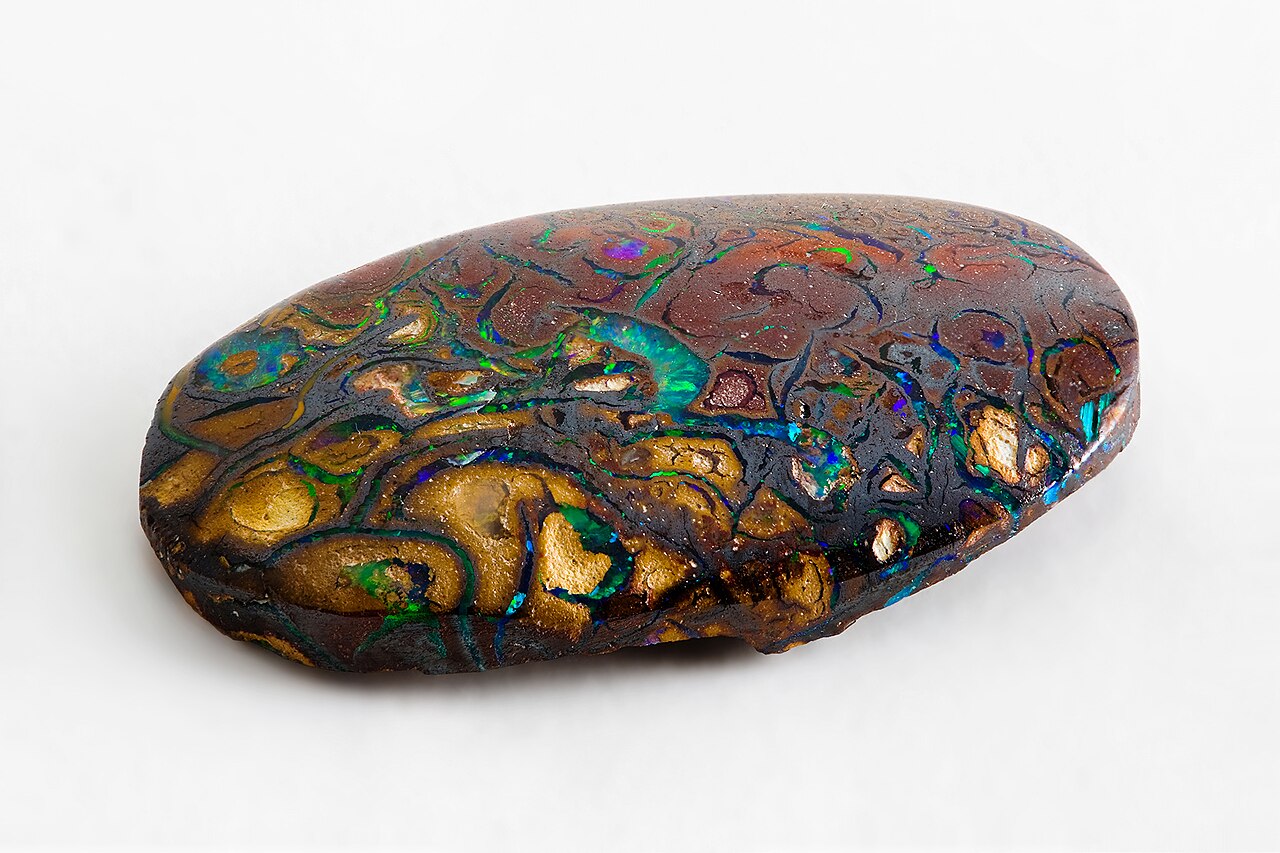
GIA separates opal into precious opal, which shows play of color, and common opal, which does not. Precious opal’s changing spectral colors relate to its internal arrangement of tiny silica spheres. GIA also describes fire opal as yellow, orange, brown, or red material that often lacks play of color. Read GIA’s opal description.
That means “it has no rainbow, so it must be fake” is not a sound conclusion. Conversely, an attractive glow or shifting color in a seller’s video is not proof of natural origin. Lighting is useful for showing appearance; it does not replace identification.
Ask for a short, unedited video with the item rotated under ordinary light, plus photographs of its front, back, and edge. Use those images to decide which questions remain unanswered, not to certify the stone from a screen.
How to read a listing before buying
Start with the material description, not the product title. A heading such as “natural rainbow opalite crystal” can combine words that sound specific while leaving the material unresolved.
Send the seller these questions:
- Is this glass, natural opal, laboratory-grown opal, or another material?
- Is the item one piece or an assembled product?
- Are any treatments disclosed?
- Do the photographs show this exact item or a representative sample?
- Can the material description be included on the invoice?
If the answers remain vague, compare it as an unidentified decorative item rather than paying a premium for an unverified gemstone claim. A low price is not a test, and an expensive setting does not identify the stone inside it.
A practical example
Imagine two pendants. One is described as opalite glass, with clear photographs and a straightforward return policy. The other is called “genuine opal crystal” but has no material disclosure and only a heavily lit promotional photograph.
The first listing gives you more usable information even though the material is manufactured. For the second, the next step is a clarification request, not a home scratch test. Decide whether you want a particular appearance, a natural gemstone, or a documented collector’s piece; those are different buying goals.
Care without turning cleaning into a test
Do not heat, scratch, soak, or apply chemicals to an unknown piece to see how it reacts. A damaged item is harder to return and may still be unidentified.
For identified opal, GIA notes that hardness ranges from 5 to 6.5 and that heat or sudden temperature changes can cause damage. Its cleaning recommendation is warm soapy water. For an assembled item or an unknown setting, first obtain care instructions for the complete piece rather than assuming every component tolerates the same treatment. GIA opal care guide.
Questions people ask
Is opalite fake opal?
Opalite glass is not natural opal. Whether a sale is misleading depends on what is promised: glass sold clearly as glass is different from glass represented as natural opal. Because the name has multiple uses, request the underlying material description.
Does real opal have to sparkle?
No. Common opal lacks play of color. Do not reject or authenticate an item on this feature alone.
Is this the same comparison as moonstone versus opalite?
No. Moonstone is another material and creates a different identification question. See our moonstone versus opalite guide if that is the name on your item.
Your next step
Write down the exact claim you want verified: material, natural origin, treatment, or construction. If the purchase depends on that claim and documentation is missing, seek independent gemological identification. For a broader starting point, use our non-destructive crystal identification guide.
Related identification guides
Garnet vs Ruby: Key Differences and Safe Checks · Jadeite vs Jade: Where Nephrite Fits · Crystal identification chart
Reference databases
Property and care guidance is checked against established mineralogical and gemological references. See our sources and methodology.