Identification & care guide
Types of Agate: Patterns, Inclusions, and Names
Agate names can describe a pattern, an inclusion, an optical effect, or a place. A Lake Superior agate can also be a fortification agate; those labels do not necessarily represent two different materials. Understanding what a name describes is more useful than memorizing a long list of supposedly separate species.
This guide groups familiar names by the feature they describe. It is a naming reference, not a photo-only identification service or a complete inventory of every commercial variety.
Start with the material
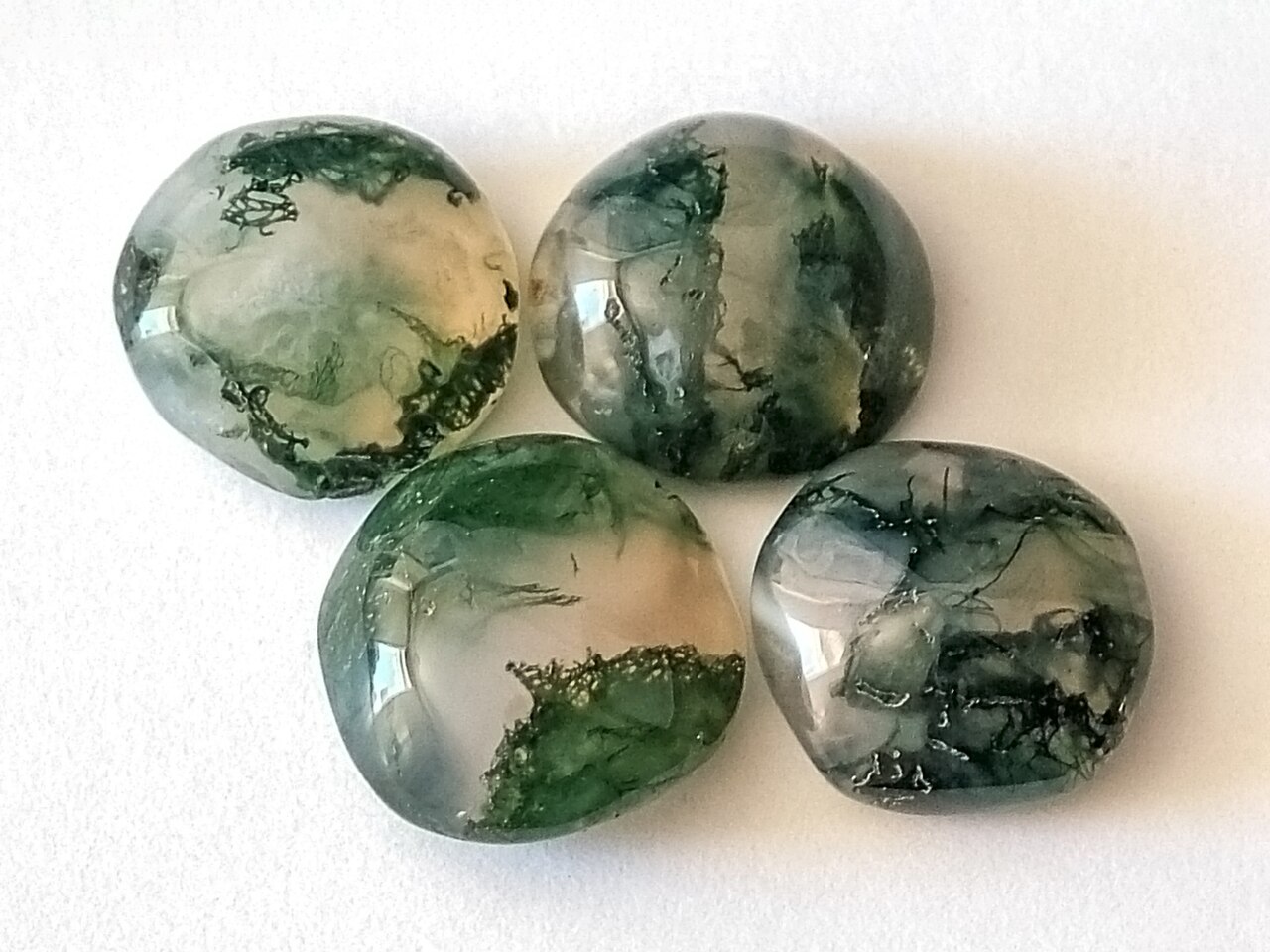
The British Geological Survey describes agate as translucent, very fine-grained quartz with banded colors. BGS agate definition. In common collecting and jewelry language, the word also appears in established names such as moss agate and fire agate, where the named feature is not simply parallel stripes.
When a label seems confusing, ask two questions: what material is being described, and what feature produced the more specific name?
A practical agate type chart
On small screens, swipe the table sideways to compare all columns.
| Name | Main naming feature | What to look for |
|---|---|---|
| Banded agate | Pattern | Repeated bands rather than one uniform field |
| Fortification agate | Pattern | Nested bands resembling the outline of a fort |
| Water-level agate | Pattern | Straight, parallel bands in part or all of the exposed section |
| Eye agate | Pattern | Rounded concentric features described as eyes |
| Lake Superior agate | Geographic and geological context | Documentation of origin as well as appearance |
| Moss agate | Inclusions | Plant-like mineral patterns within chalcedony |
| Fire agate | Optical effect | Iridescence associated with internal mineral inclusions |
The chart is deliberately organized by naming feature. It should not be used as a checklist in which every stone must fit exactly one row.
Banded fortification water-level and eye agates
The Minnesota Department of Natural Resources describes fortification bands as looping back on themselves, water-level bands as straight and parallel, and eye agates as having rounded concentric markings. Its Lake Superior guide places these forms in a shared regional context rather than treating every pattern as an unrelated gemstone. Minnesota DNR agate guide.
For your own specimen, record the pattern you can see on the exposed face. Do not assume an uncut exterior will reveal the same detail as a polished slice. If several features occur together, retain more than one descriptive label rather than forcing a choice.
Moss agate is named for its resemblance
Mindat describes moss agate as chalcedony with mineral inclusions, including green or darker branching material. The name refers to a moss-like appearance, not living moss trapped in a stone. Mindat moss agate reference.
When comparing examples, look at the relationship between the inclusions and the surrounding material. A photograph can help communicate that appearance, but it does not establish every mineral present or verify a seller’s treatment claims.
Fire agate is about iridescence
Fire agate is a chalcedony variety associated with goethite or limonite inclusions that produce an iridescent effect. Mindat fire agate reference. “Fire” in this name is not simply a synonym for red or orange.
If you are evaluating a listing, ask for a video that changes the viewing angle under ordinary lighting. A single colorful frame may hide how much of the surface displays the effect. Record what is visible rather than treating the product name as a substitute for examining the actual piece.
Locality names need a different kind of evidence
Lake Superior agate illustrates the difference between a regional name and a pattern. Minnesota DNR describes its characteristic iron-related red, orange, and yellow colors and its geological history. A pattern description can coexist with that geographic description.
For an unidentified stone, resemblance is a starting point, not provenance. Keep a collector’s original label or a seller’s location statement attached to the specimen record. If no location is known, write “origin unknown” instead of assigning the name of the closest-looking online example.
A simple way to label your collection
Use a short record with separate fields:
- Material: identified, provisionally identified, or unknown.
- Visible features: bands, eyes, branching inclusions, or iridescence.
- Source: where it was collected or purchased and what was originally claimed.
- Finish and condition: rough, sliced, polished, damaged, or repaired.
- Treatment information: disclosed details or unknown status.
This format lets you improve a record later without losing the original information. “Chalcedony with green branching inclusions, purchased as moss agate, origin unknown” is more transparent than an elaborate unsupported locality label.
Questions beginners often ask
How many types of agate are there?
There is no useful single total for this guide because pattern terms, locality names, and trade names overlap. A list of fifty names is not necessarily a list of fifty separate mineral species.
Is every agate a geode?
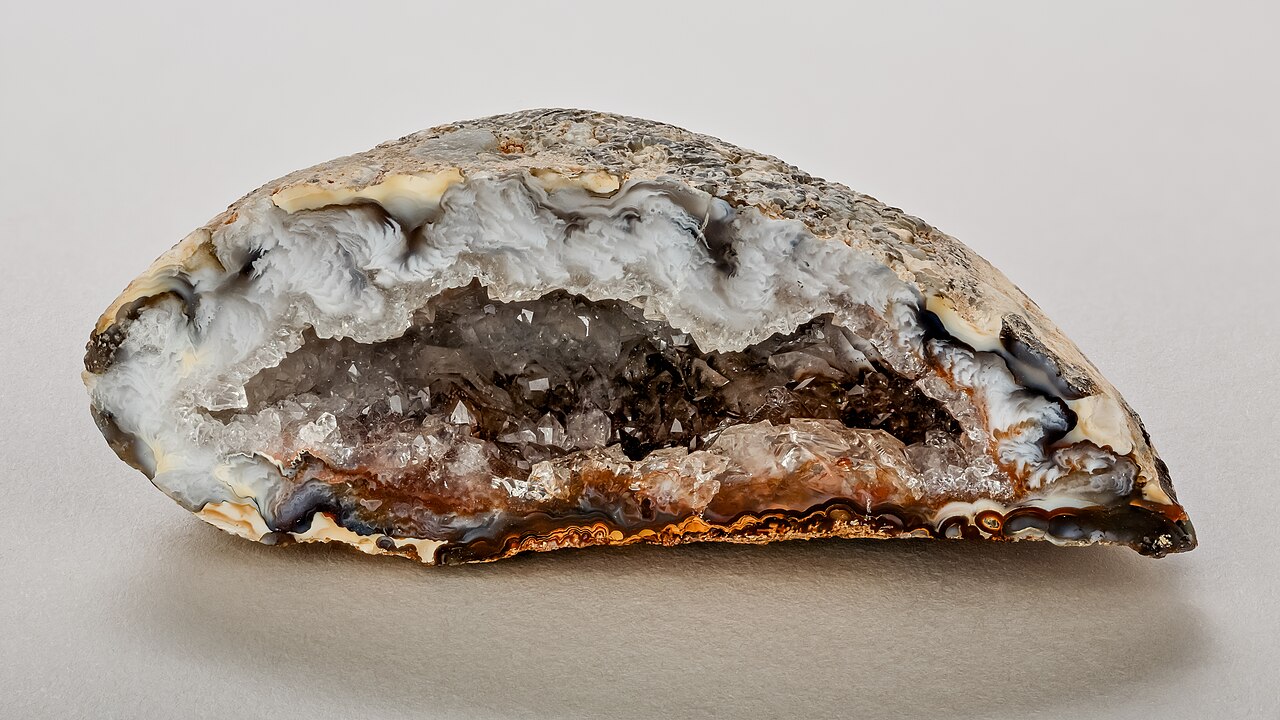
No. Agate describes material and appearance, while geode describes a cavity-bearing structure. A specimen can contain agate without being hollow.
Does a pattern name prove a stone is natural or untreated?
No. A naming chart does not answer every authenticity or treatment question. For a specimen you already own, start with our non-destructive identification guide and keep uncertain claims clearly separated from observations.
Related identification guides
Agate or Geode? The Difference Explained · Types of Jasper: Colors, Patterns, and Trade Names · Crystal identification chart
Reference databases
Property and care guidance is checked against established mineralogical and gemological references. See our sources and methodology.